10 Days Grand Morocco Tour from Casablanca

Loading available options...

Overview

  • Duration:10 days 9 nights
  • Travelers:15 guests
  • Tour Type:Desert, Morocco, Tours from Casablanca
  • Language:English, French, Spanish
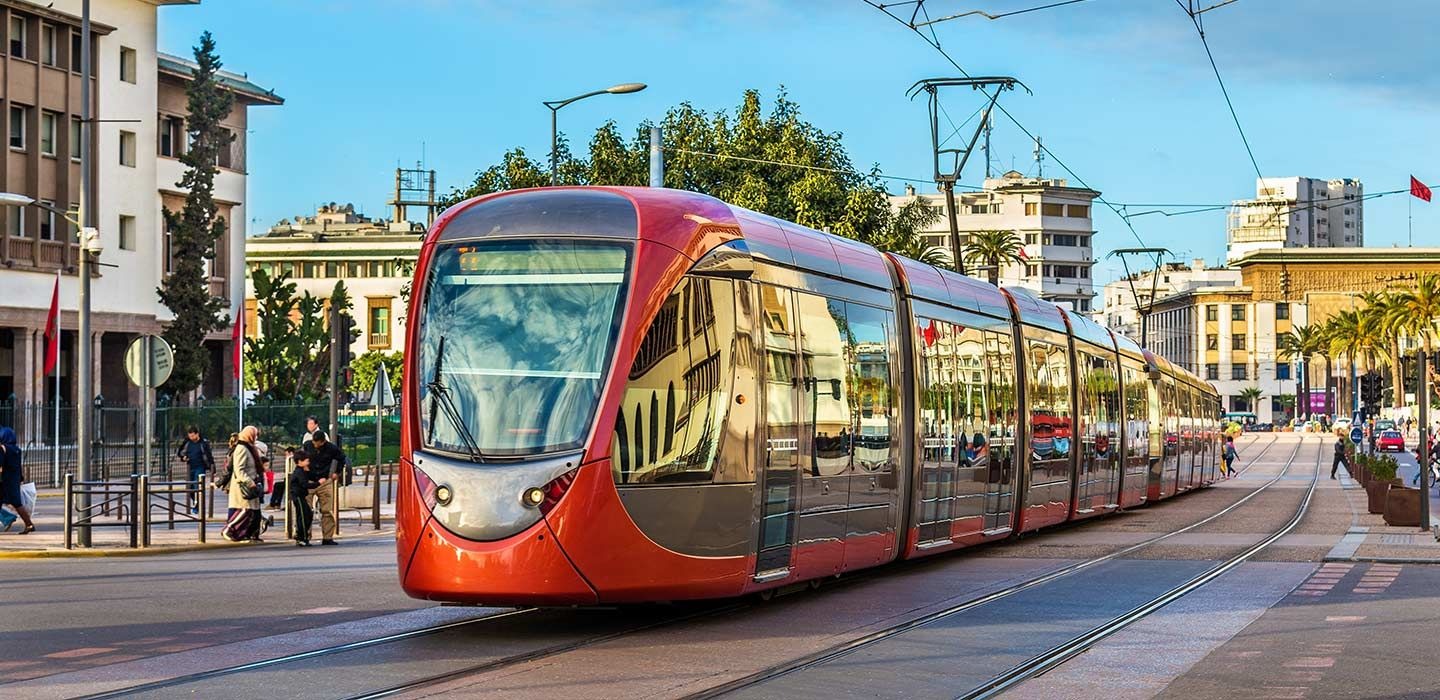
This 10-day Morocco tour from Casablanca invites you to explore Morocco’s most iconic destinations — from the elegant Imperial Cities of Rabat, Fes, and Marrakech, to the blue-washed town of Chefchaouen, and the golden dunes of the Sahara Desert in Merzouga.

Begin your journey in Casablanca and Rabat, where modern architecture blends with royal history. Wander through the Hassan II Mosque and the Mausoleum of Mohammed V, then head north to the charming blue streets of Chefchaouen. Continue to Fes, Morocco’s spiritual heart, to uncover centuries of history, artisan traditions, and lively medinas.

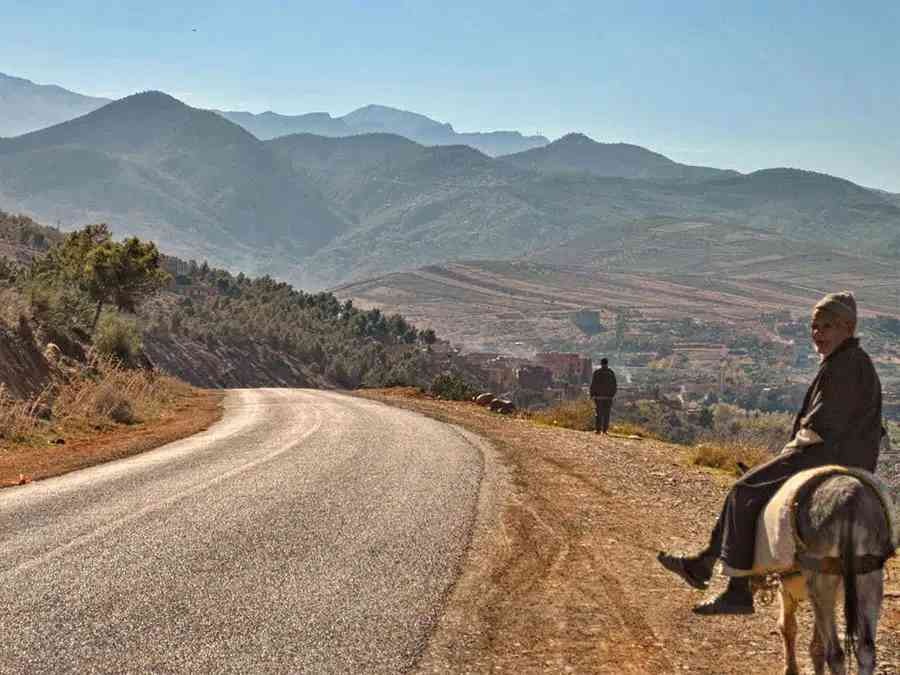
Cross the Middle Atlas Mountains, meet Barbary macaques in the cedar forests, and travel south to the desert, where a camel trek at sunset and a luxury camp under the stars offer an unforgettable experience. From there, explore the breathtaking Todra Gorges, the Dades Valley, and the Kasbah Aït Ben Haddou, before concluding in Marrakech, the vibrant “Red City.”

This well-balanced Morocco itinerary combines culture, adventure, history, and natural beauty, offering a seamless and authentic experience through the soul of Morocco.
Read more

Highlights

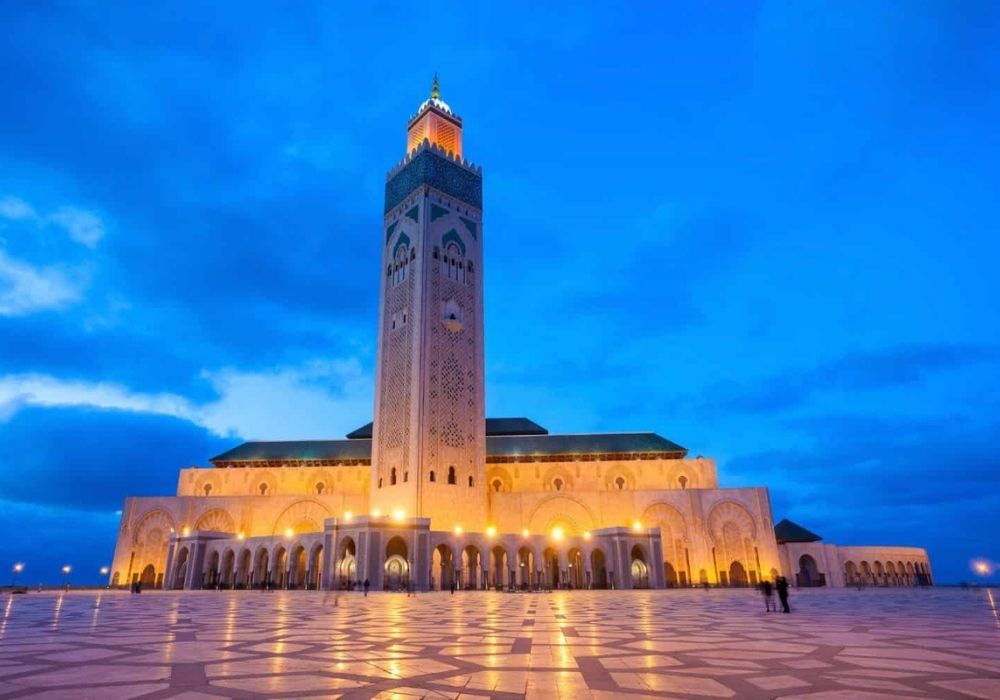
  • Visit the magnificent Hassan II Mosque in Casablanca, the largest functioning mosque in Africa.
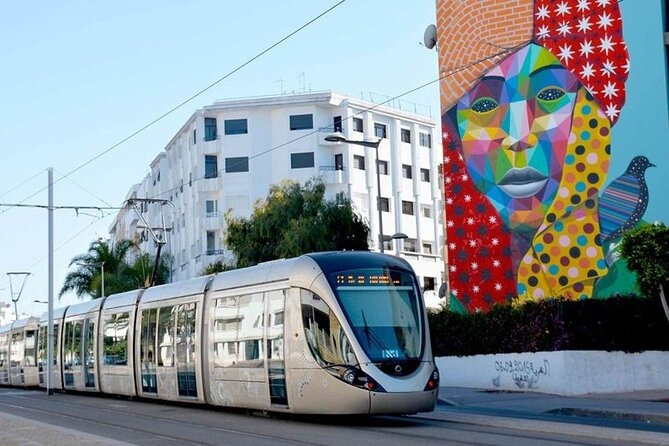
  • Discover Rabat’s Hassan Tower, Mausoleum of Mohammed V, and the historic Chellah ruins.
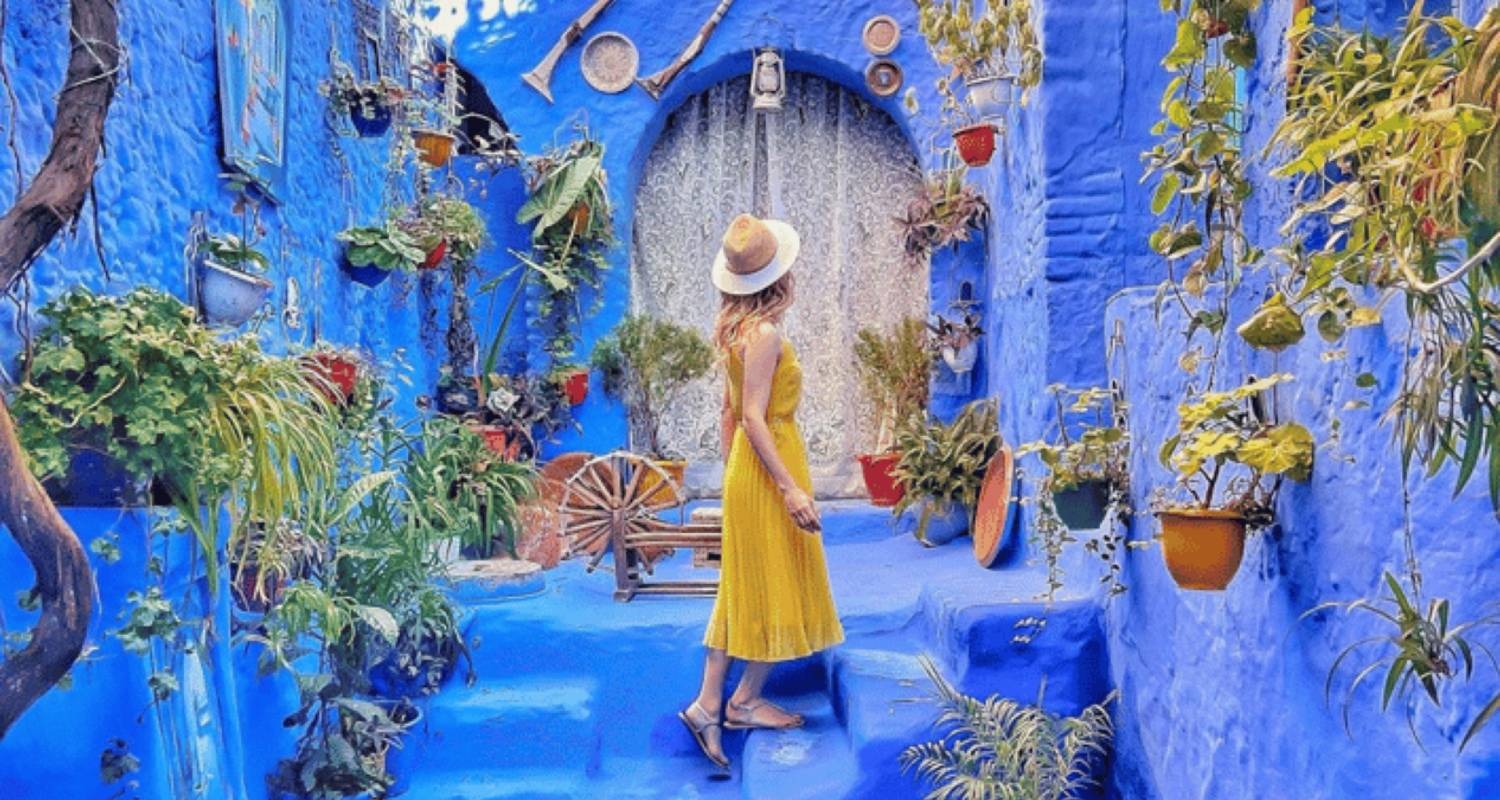
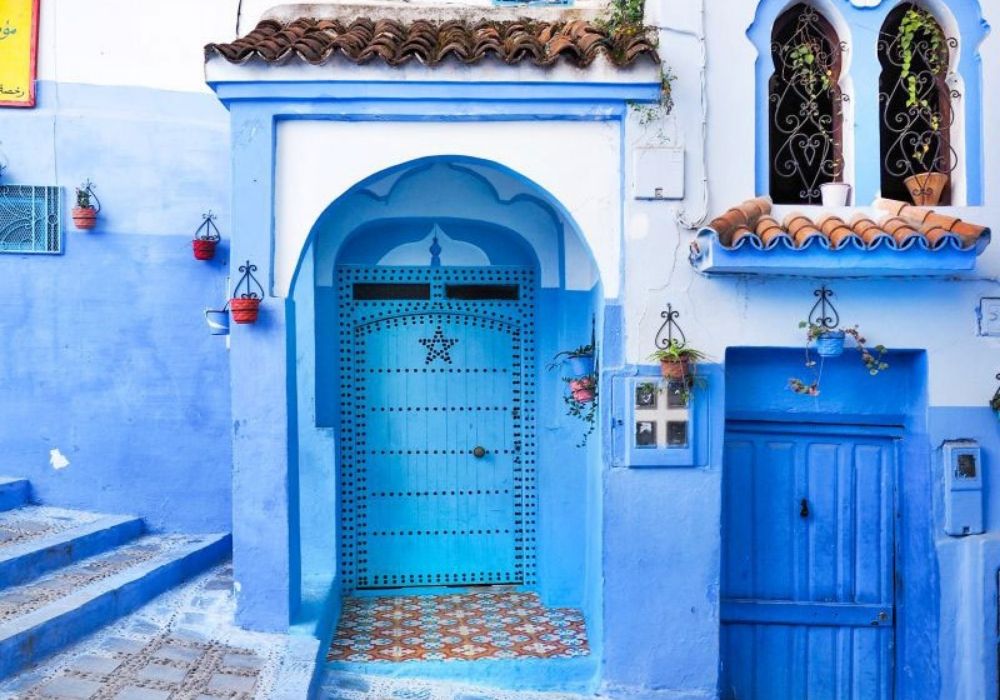
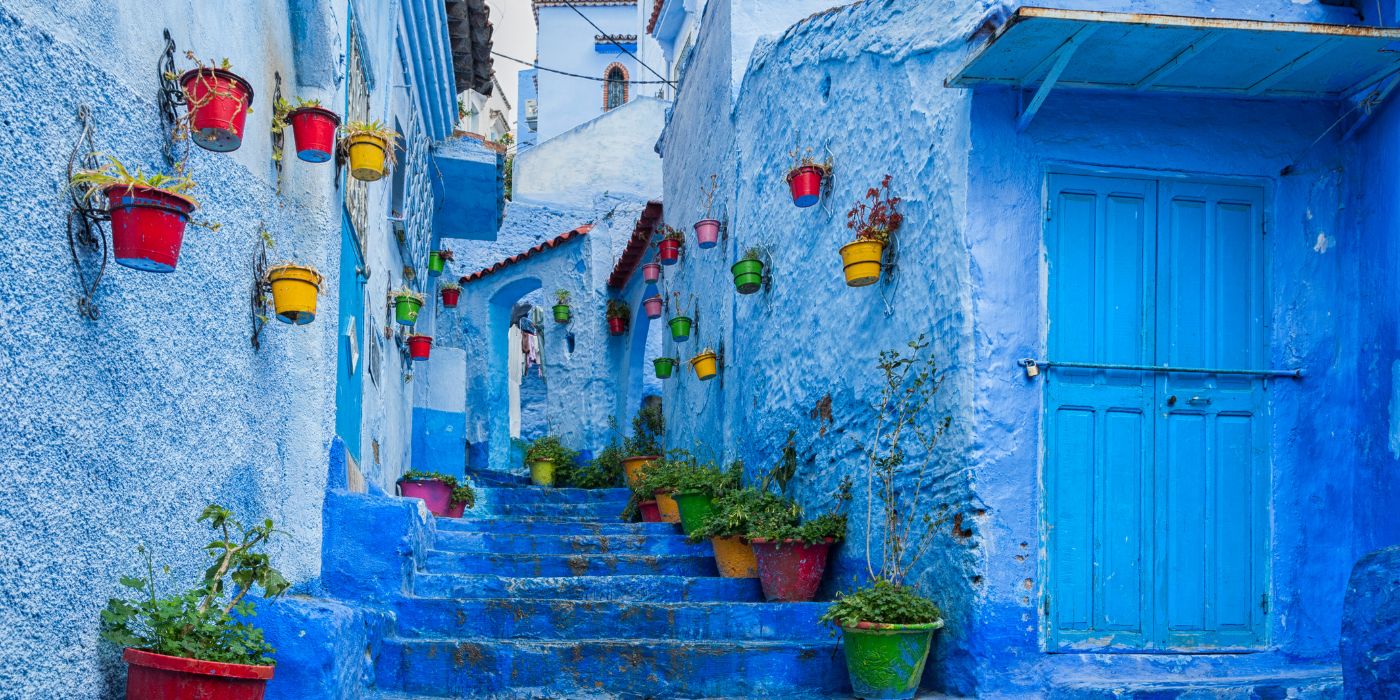
  • Explore Chefchaouen’s magical blue alleys and the Roman ruins of Volubilis.
  • Wander through the UNESCO-listed medina of Fes, famous for its souks, mosques, and tanneries.
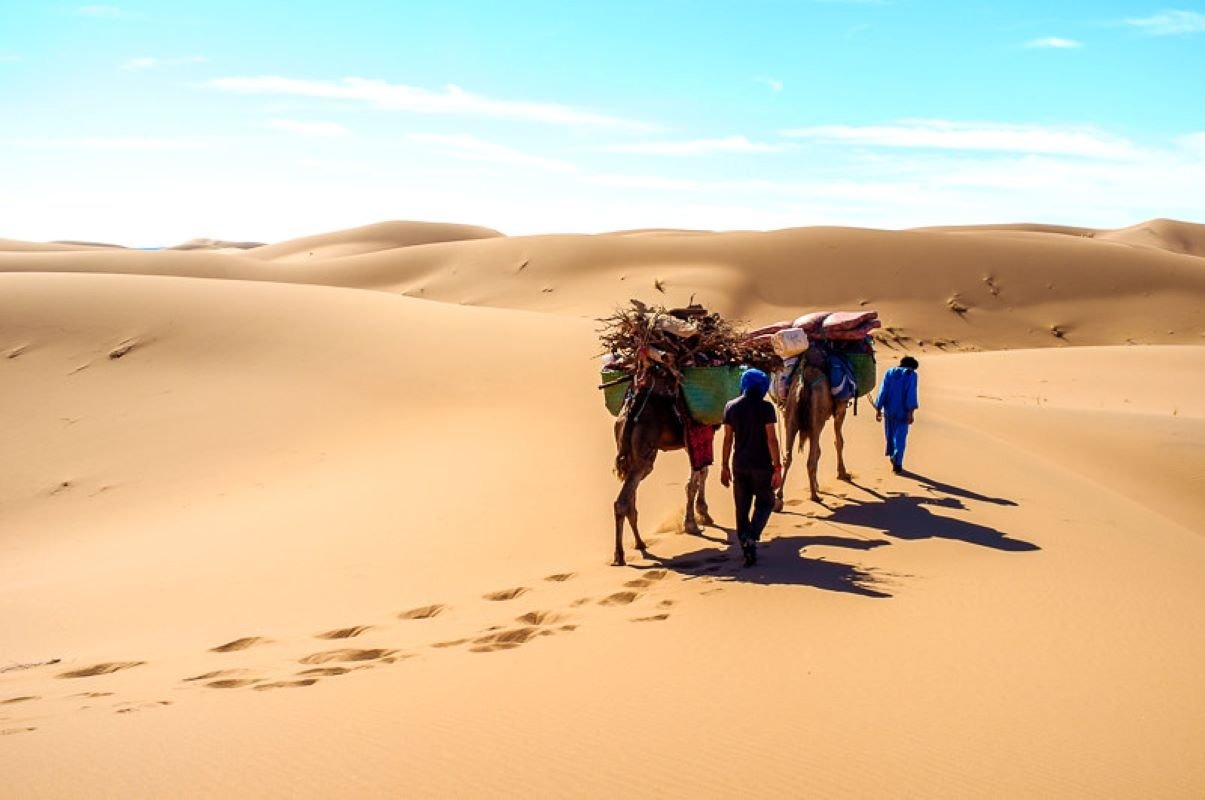
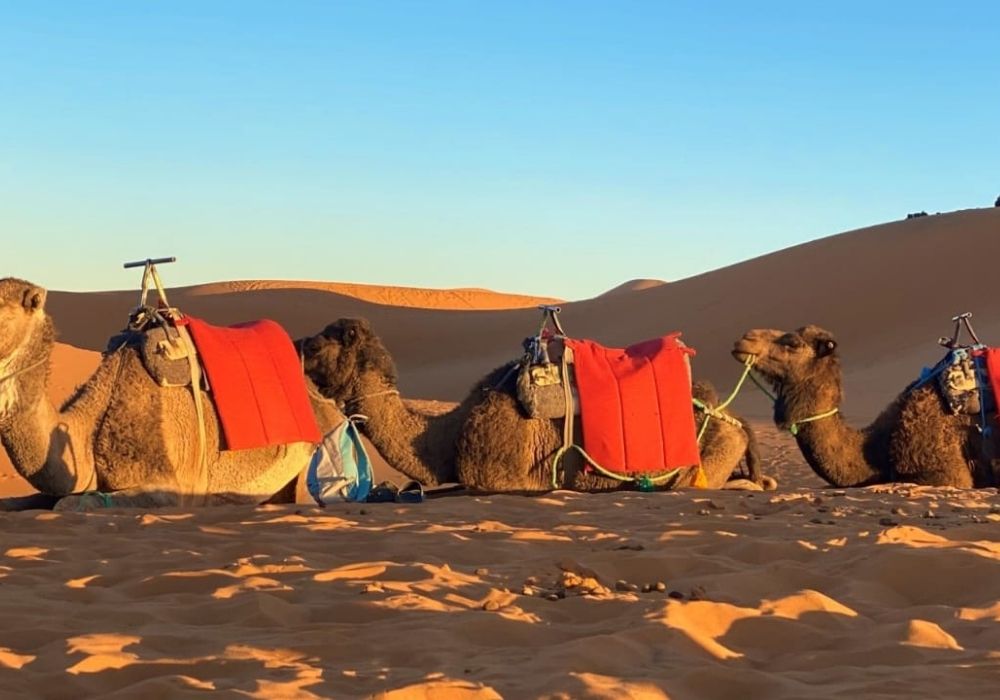
  • Ride camels through the Sahara Desert dunes at sunset.
  • Spend a night in a luxury desert camp with Berber drumming under the stars.
  • Admire Morocco’s ancient Kasbahs including Aït Ben Haddou, Telouet, and Amredhil.
  • Visit Ouarzazate’s cinematic landscapes and the Roses Valley.
  • Cross the High Atlas Mountains via Tizi n’Tichka Pass.
  • Experience Marrakech’s colorful souks, palaces, gardens, and the lively Djemaa el-Fna square.

Itinerary

Expand all

Day 1: Casablanca – Rabat

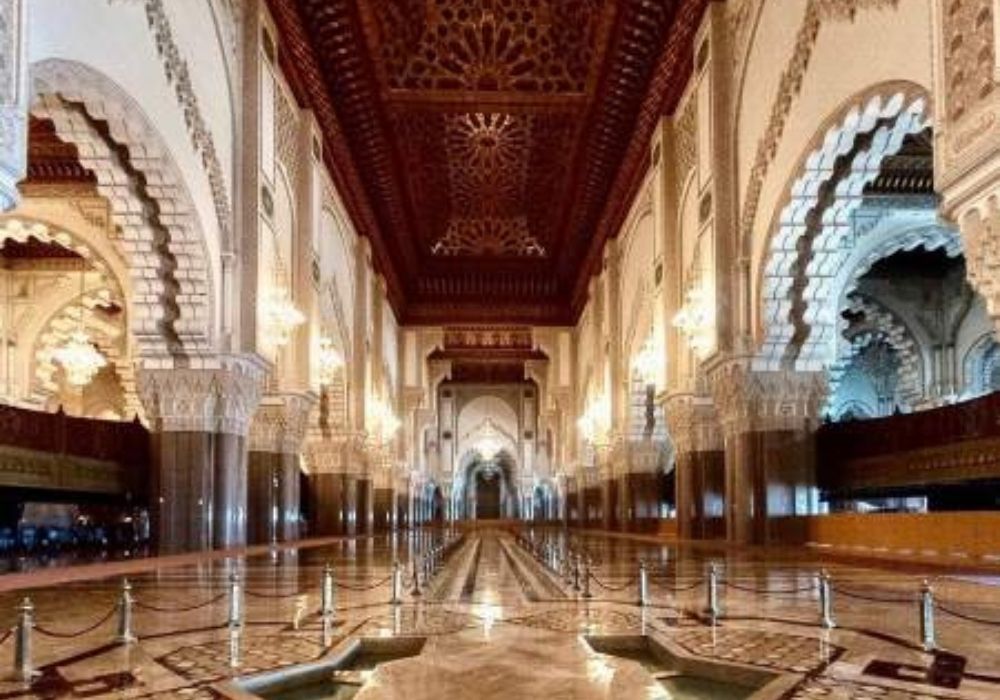
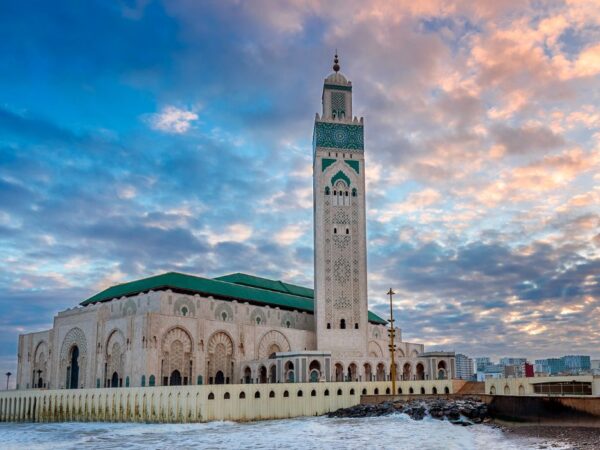
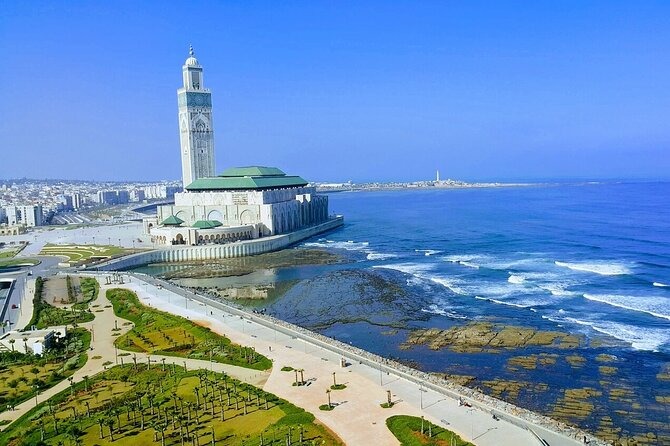
Our driver will greet you at the airport in Casablanca and transfer you through the beautiful Moroccan landscape to the city in an air-conditioned vehicle. Welcome to Morocco! Once in the city centre, you can visit the Hassan II Mosque, which was opened in 1993. Built to mark Hassan II’s 60th birthday, it is the second largest religious building in Africa, with the second highest minaret in the world. On Fridays and religious holidays, visits are only possible at restricted times. Due to high visitor numbers, there may be waiting times at the ticket office. The tour of the imposing building takes about one hour and tickets cost about 120 dirhams at the time of publishing. Afterwards, continue to the capital Rabat where you can visit the historic, fascinating and recently additionally excavated Chellah. Built on Roman foundations, the 14th-century necropolis is one of the most unique sites in Morocco. You will spend the night in a beautiful riad at the heart of the medina. FYI: Guided tours of the Hassan II mosque are limited on Fridays or religious holidays. Please check the schedule here: Hassan II Mosque Tours and Tickets

Day 2: Rabat – Chefchaouen

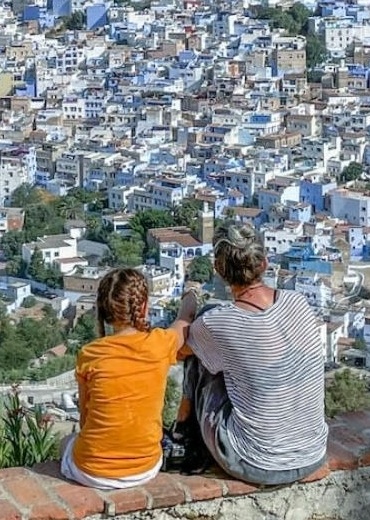
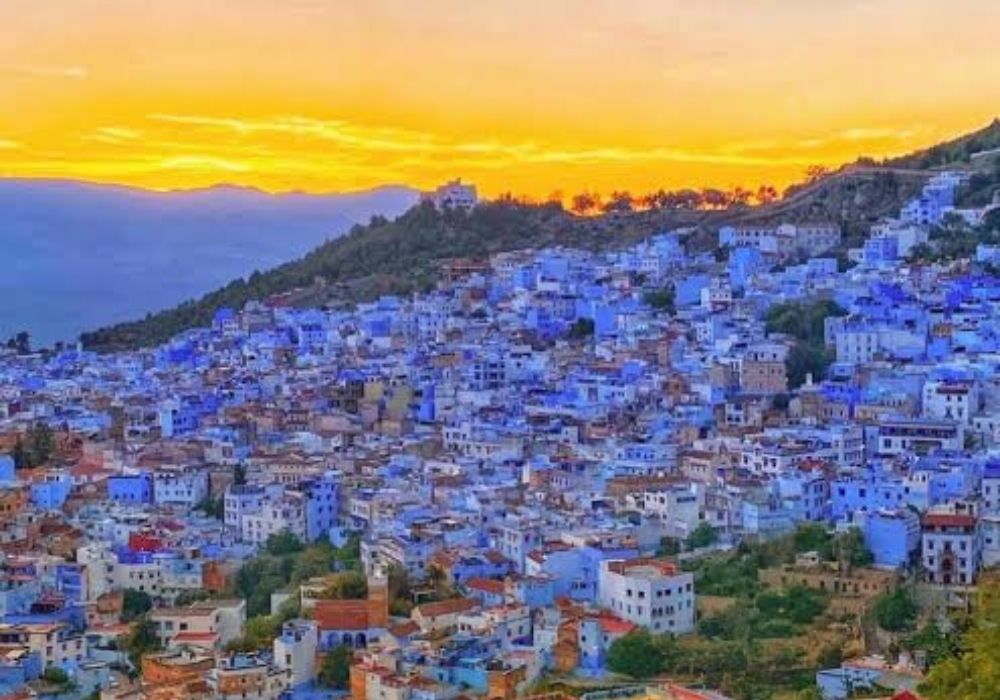
After breakfast at the riad, you will have the opportunity to visit the Mausoleum of Mohammed V, built in homage to the late king who passed away in 1961. His son and successor, Hassan II, who died in 1999, is also entombed here. The intricate tilework inside the mausoleum is truly remarkable with every tiny tile cut and set in place by hand. Afterwards, you will take the motorway via Ouazzane through the mountains to your next tour destination, the “blue town of Chefchaouen” in the Rif mountains. You can then spend your free evening exploring the many dreamlike streets and alleyways. You will certainly find plenty of the little Moroccan cafés in the town to relax and watch the world go by. You will spend the night in a riad.

Day 3: Chefchaouen – Volubilis – Fes

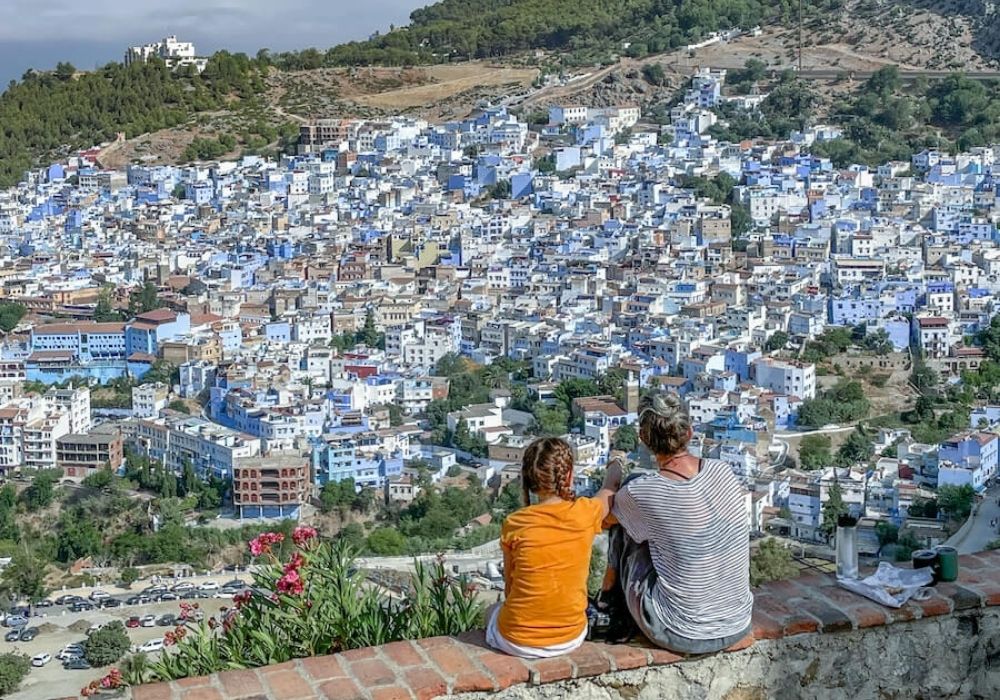
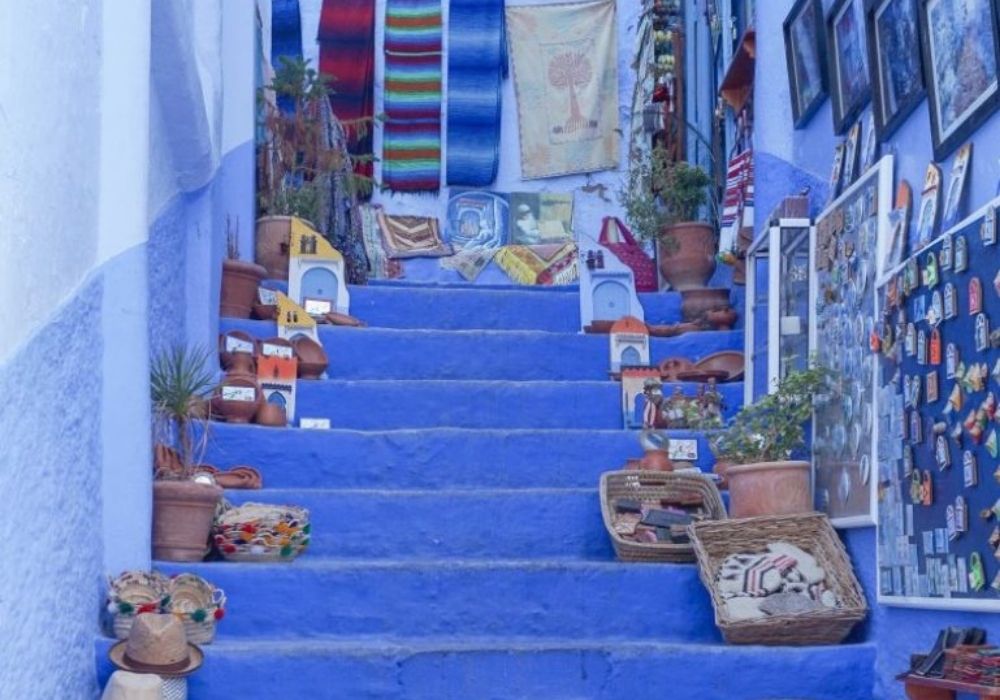
After breakfast, you can spend the morning exploring more of Chefchaouen. Begin your tour in the lively Plaza Uta el-Hammam, the main square of Chefchaouen, surrounded by cafes, restaurants, and shops, and home to the red-walled Kasbah and Grand Mosque. You have an opportunity to stroll through the narrow, blue-painted streets of the Chefchaouen Medina, where the charming blue and white buildings create a picturesque backdrop, and to explore local craft shops. At the Kasbah Museum, you can learn about the region’s history and culture through its collection of artefacts and art. After lunch, you will drive south to the oldest Moroccan imperial city of Fes, located in the Middle Atlas Mountains. With a guide, you will be able to explore the nearby UNESCO World Heritage Site, Volubilis, a most rewarding excursion to the ruins of the former capital of the province of Mauretania Tingitana. Founded around 25 AD under Juba II, Volubilis formed the administrative centre in the region. This World Heritage Site is the largest Roman archaeological site in Morocco, with temples from the Punic-Moorish period. Looking up from this ancient setting, you can see and later visit the small hillside holy city of Moulay Idris. It is the most important place of pilgrimage in the country and houses the tomb of Moulay Idriss, the first ruler of an independent Moroccan empire and founder of the Idrisid dynasty. NOn-Moslems are not permitted entry, however. The onward journey takes you through a tranquil hilly landscape past numerous farms to Fes. There you will spend the night in a riad.

Day 4: Full-Day Fes Sightseeing

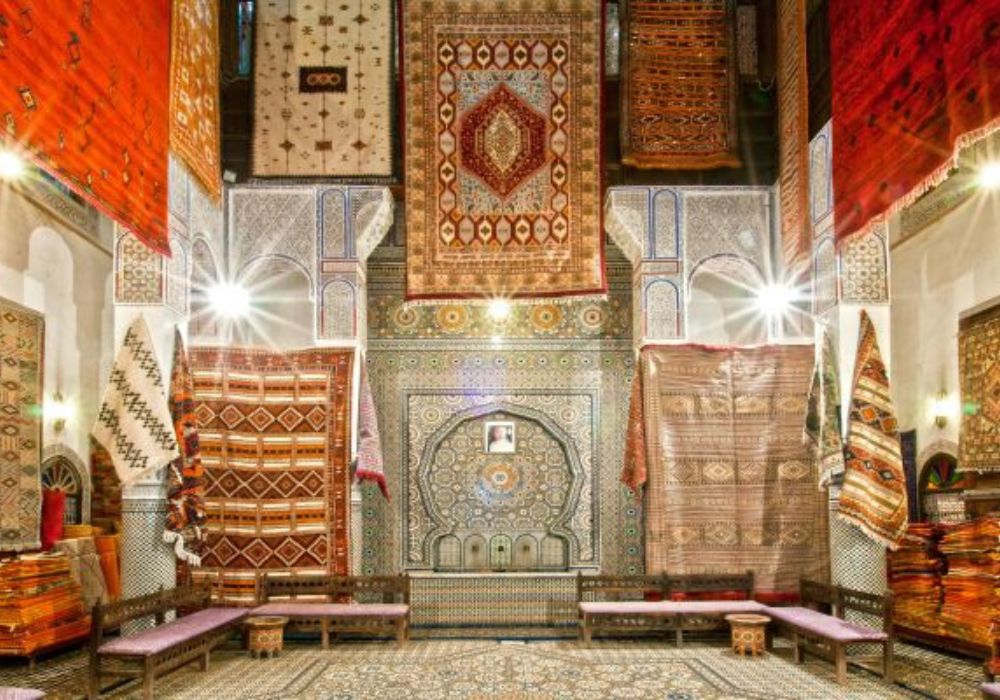
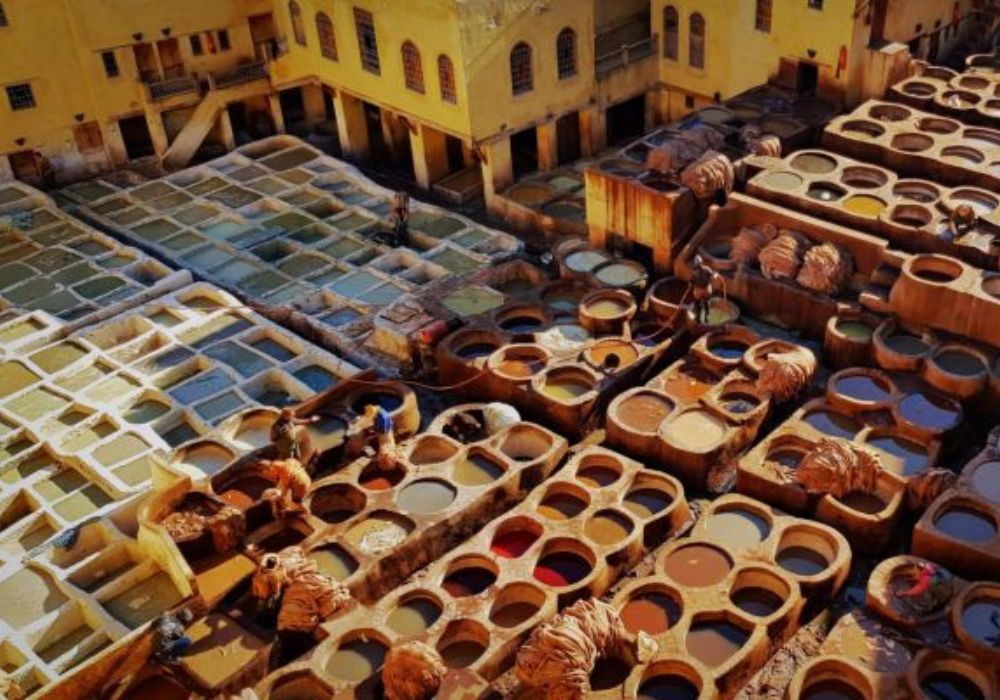
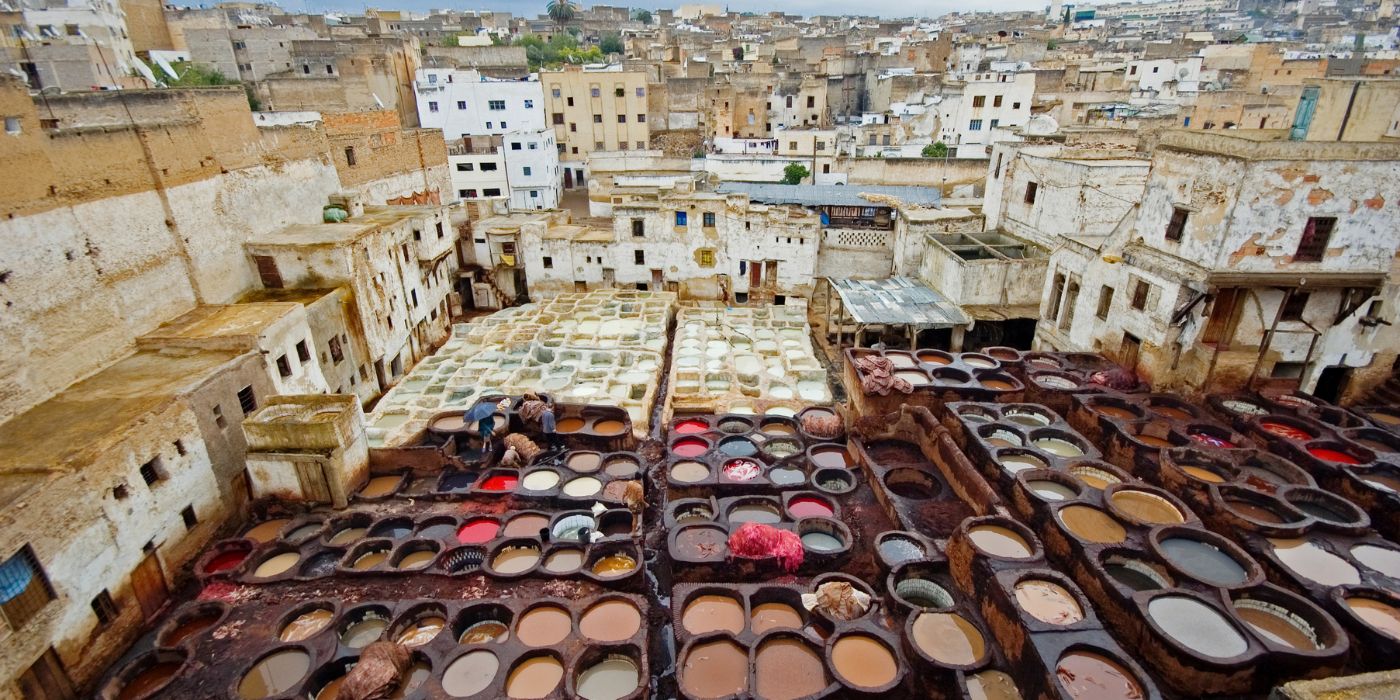
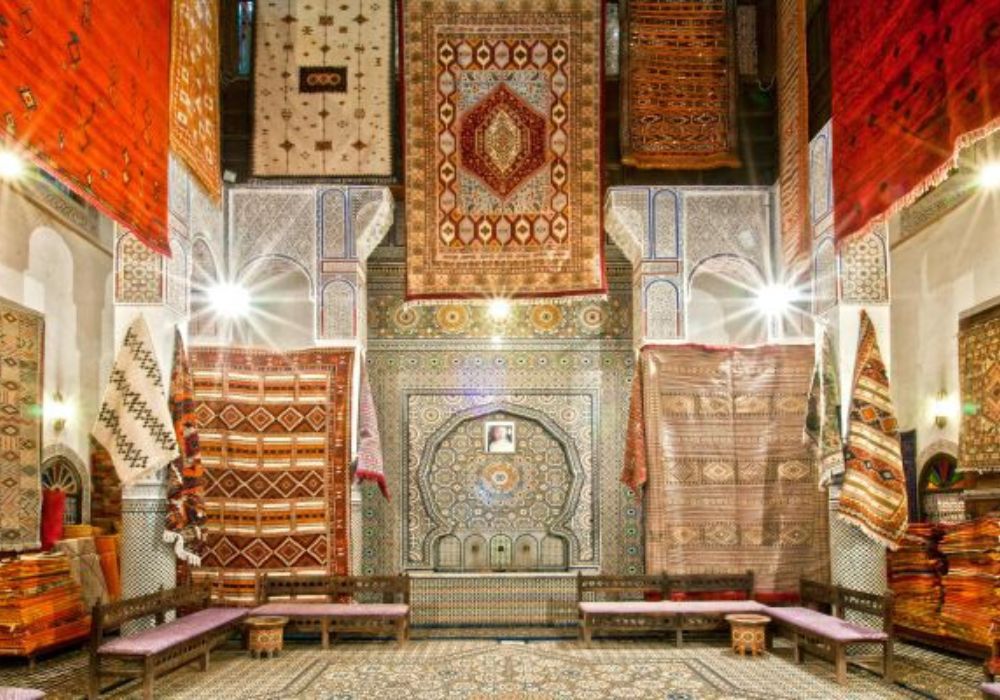
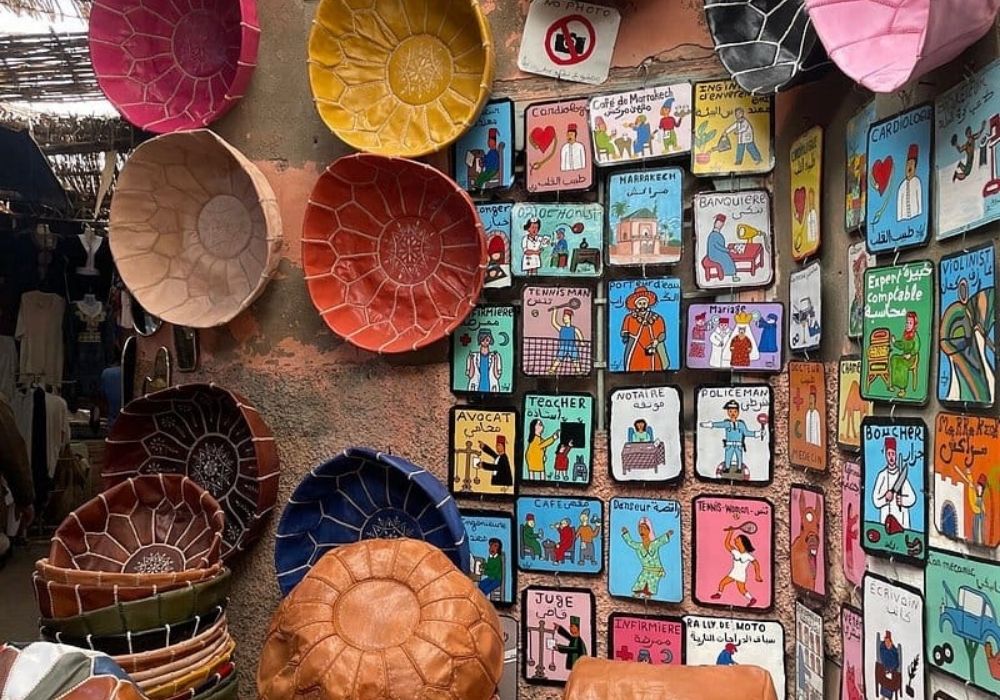
After meeting your licensed local guide, there is the pleasure of a full-day sightseeing tour of Fes, the oldest of Morocco’s four “Imperial Cities.” This will take you to some of the most iconic and intriguing attractions, offering a deeper understanding of this ancient Moroccan gem. You can visit the following places, according to time and your preferences: The University of Al Quaraouiyine: Begin your exploration at the prestigious University of Al Quaraouiyine, renowned as one of the world’s oldest continuously operating educational institutions. Established in the 9th century, it holds a unique place in history as a hub of learning. Bou Inania Medersa: Next, You will be visiting the Bou Inania Medersa, a religious school celebrated for its stunning mosaics, exquisite stucco work, and detailed architecture. Here you can admire the beauty of Islamic artistry in this historic setting. As a non-Moslem you will be allowed access to the magnificent courtyard. The Royal Palace: Although not open to the public, the exterior of the Royal Palace is a masterpiece of Moroccan architecture. Why not pause here to appreciate the intricately designed portal, capturing the essence of Moroccan royalty? The Medina: In Fes’ UNESCO-listed Medina you will be immersed in its labyrinth of streets that have preserved their mediaeval charm. Encounter bustling souks, ancient mosques, and historic landmarks, offering a glimpse into the city’s vibrant past. Leather Tanneries: Fes is renowned for its centuries-old leather production. At the tanneries, you will be able to witness the traditional techniques employed in crafting leather goods, gaining insights into the city’s time-honoured craftsmanship. Local Market: The vibrant markets of Fes teem with life and offering a wide array of products. Souvenirs, textiles, spices, ceramics, wooden crafts, silver jewellery, and leather goods are all on display and indicate the diversity of Moroccan culture and artistry. Nejjarine Museum of Wooden Arts and Crafts: Your tour ends at the Nejjarine Museum, housed in a beautifully restored caravanserai. A wealth of wooden arts and crafts integral to Moroccan culture can be admired. The museum’s exhibits provide an in-depth look at the intricate craftsmanship that defined Fes for generations. Your sightseeing tour ends as your guide accompanies you back to your riad.

Day 5: Fes – Ifrane – Azrou – Midelt – Merzouga

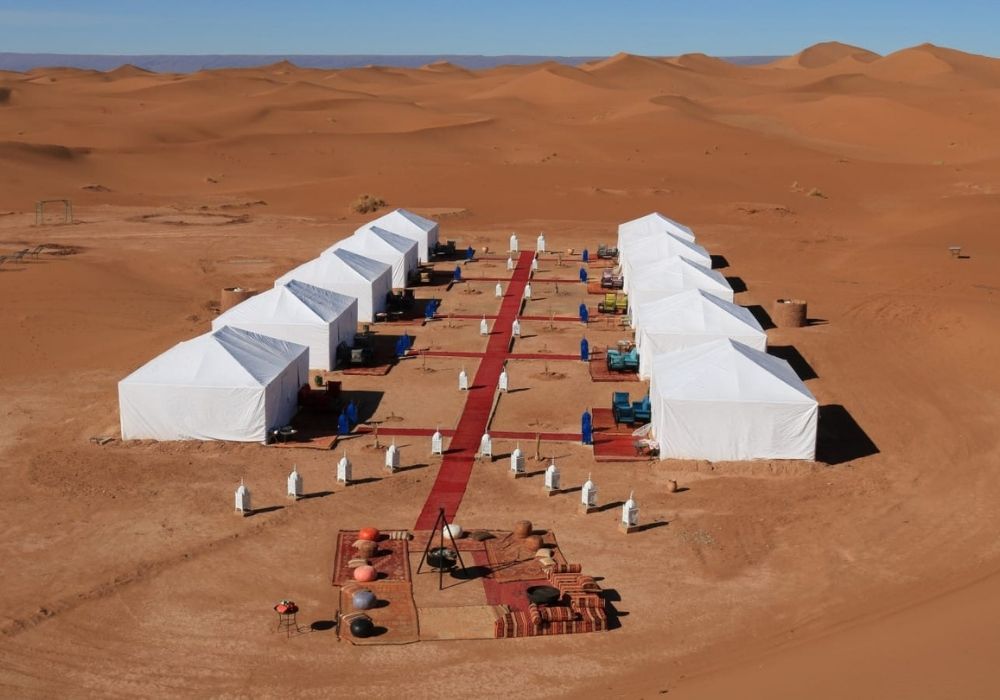
Today’s journey takes you south over the Middle Atlas Mountains, passing through Ifrane, a town at 1665 m above sea level in the Fes-Meknes region, known for its European appearance. Its sloping roofs are functional in winter, as Ifrane serves as both a summer and winter sports resort. Continuing via Azrou at 1278 m, known for its oak and cedar forests that provide an ideal habitat for Barbary apes, you’ll travel through Timahdite at 1800 m, in the heart of the Middle Atlas, and onward to Midelt in the Drâa-Tafilalet region. This town, once home to Tarik Ibn Zyad, a French governor, retains traces of its colonial past. Known as Morocco’s “apple capital,” it is surrounded by orchards and wheat fields and is famous for its Berber carpets. After lunch, the journey continues south along the N9, crossing the 2250 m Tizi-n-Talghemt Pass. This region, lined with palm trees, offers the chance to observe countless ksars (small villages). Passing through Errachidia, the route leads to Erfoud, often called the “gateway to the Sahara,” renowned for its date festival and ancient fortified villages. The nearby oases offer impressive fertility, and there is the opportunity to experience the lively atmosphere of the local souk, with stalls offering Berber handicrafts, fresh dates, olives, and fossils. We continue via Rissani to the famous and beautiful red dunes of Erg Chebbi in Merzouga. From here you can take a camel ride to your camp for the night, or you can be driven to your camp if you prefer.  You will have dinner in your luxury camp, which offers a private bathroom, king-size beds, exquisite Moroccan furniture and its own lighting. An evening of music in a traditional nomadic tent brings the day to a close for you in a special way.

Day 6: Merzouga Desert Exploration

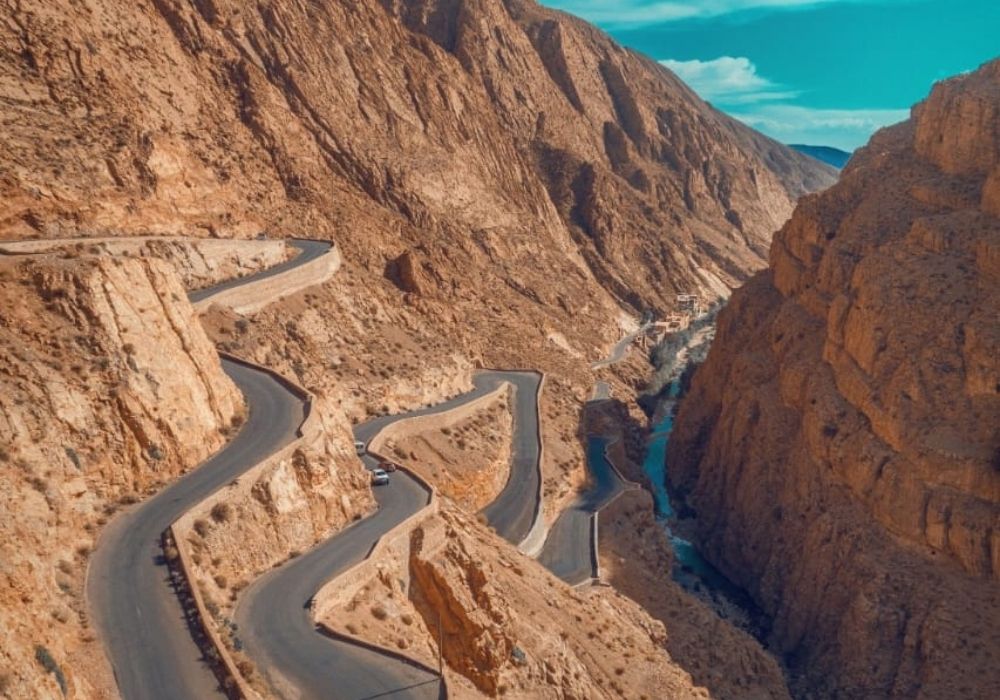
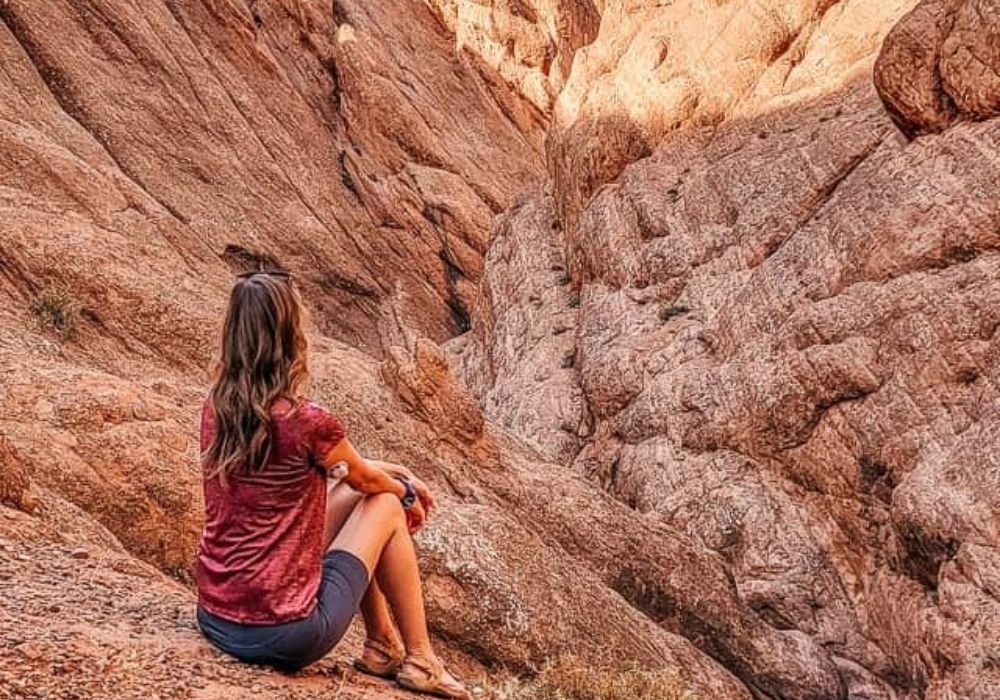
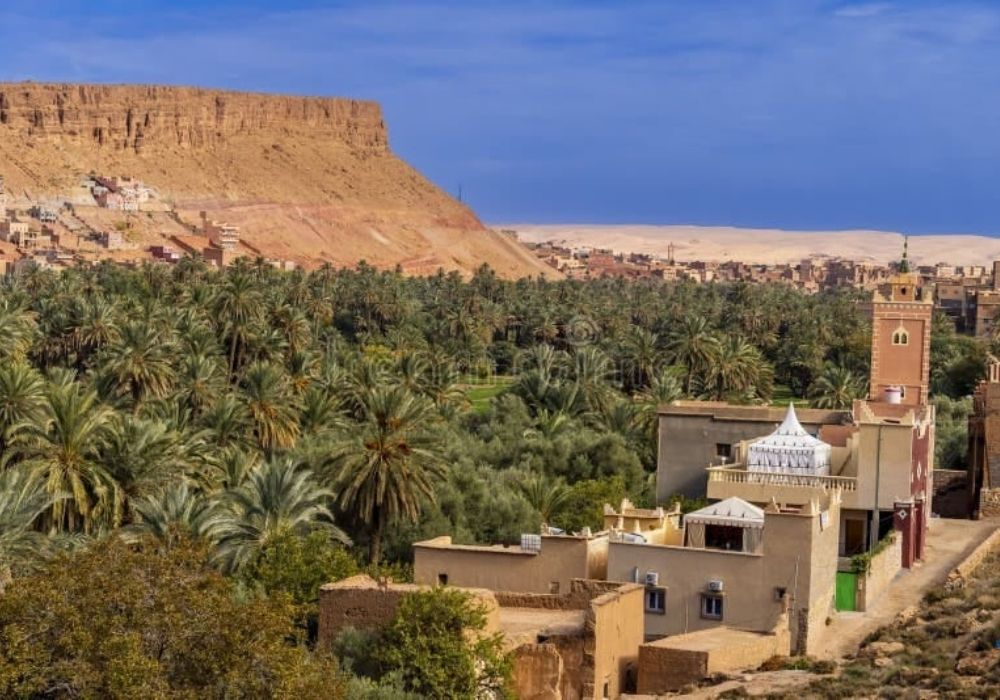
If you wake up early enough, you can watch the incomparable play of colours of the Erg Chebbi dunes at sunrise. There is nothing like this natural spectacle of the red dunes of Erg Chebbi. After breakfast in the camp, Tinghir and the Toudgha Gorges are on the itinerary. Along the way, you’ll have the opportunity to learn about the “qanats,” an ancient underground canal system used to irrigate remote areas, providing water to oases, gardens, and farms. These masterful constructions also prevented water evaporation. While the first qanats date back to the 12th-14th centuries, most in the region were built about 300 years ago. Unfortunately, only a few remain functional, as motorised pumps in the 1970s caused groundwater levels to drop. You can still visit some qanats and walk along them via access shafts. Near Tinghir, the Toudgha Gorge offers one of Morocco’s most striking landscapes. Carved by the “Oued Toudgha,” the most significant river in the province, this gorge is especially fascinating, though the river often dries up during the summer months. You’ll have the chance to explore the gorge or stroll through the gardens and fields of Tinghir. Later, the journey continues to the Dades Valley, home to Morocco’s “Grand Canyon.” The river, which predated the rise of the High Atlas, shaped this stunning landscape over millions of years, creating sand and limestone formations from ancient coral reefs and sediment deposits. You will spend the night in a hotel.

Day 7: Merzouga – Todra Gorge – Dades Valley

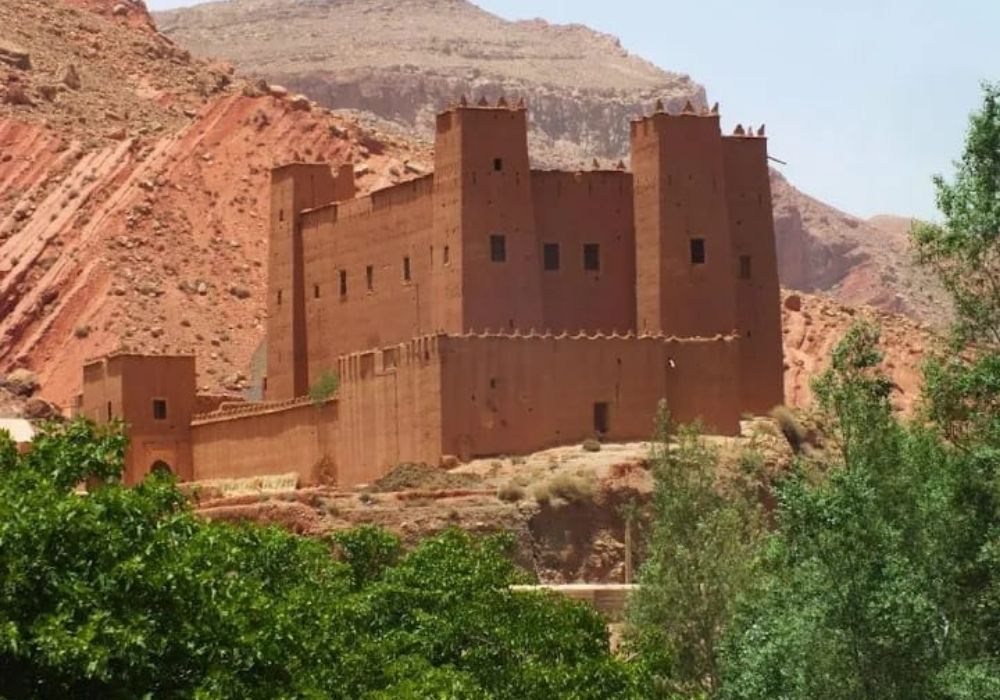
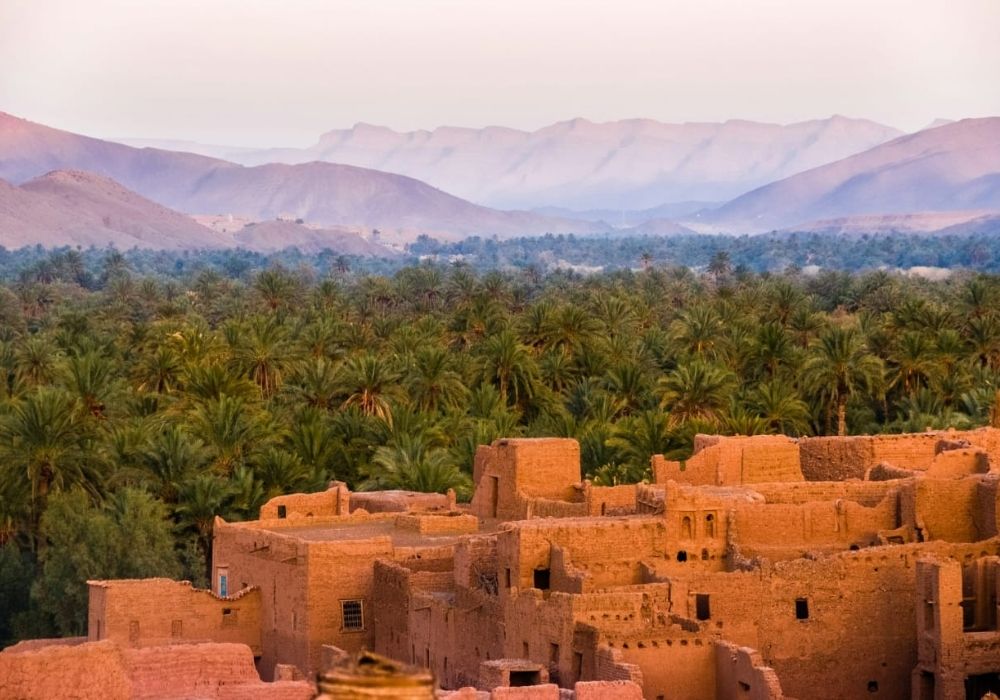
Right after breakfast, we offer you a short walk through the whimsical landscape of the Dades Gorge. Afterwards, you will drive off-road along the Boutaghar track towards Ouarzazate. Along this track, Berber nomads live in rock caves, whom you can visit to enjoy a glass of tea together. This encounter quickly makes clear how much ancient traditional Berber life still exists today. Not only does the great aridity makes their existence here precarious in terms of provisions and animal husbandry, but raising the children is also a challenging task. From here, we continue through the “Valley of Roses”. Due to the numerous rose bushes along the banks of the Oued, the Dades Valley received this nickname and is one of the most beautiful natural areas in Morocco. Every year in May, the Rose Festival takes place there. Cosmetics and hygiene products are produced and sold here. These goods are appreciated and popular throughout the country. Once in Skoura, one of the most beautiful oases in Morocco, a visit to the impressive Kasbah Amredhil, a 17th-century citadel, is a must. The grandiose architecture of this mighty structure is truly awe-inspiring. Due to the building material used, “adobe”, sun-dried clay straw bricks, and the massive wall thicknesses, it stays warm in the buildings in winter and cool in summer. After the visit, a 45-minute drive will take you to Ouarzazate, where you will spend the night in a riad.

Day 8: Dades Valley – Skoura – Ouarzazate

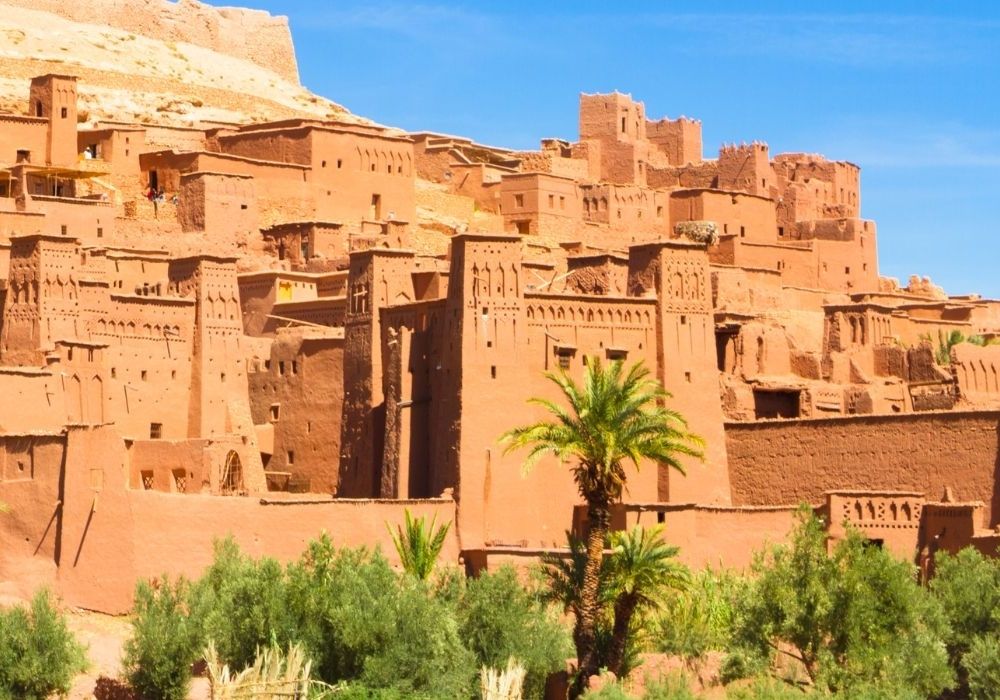
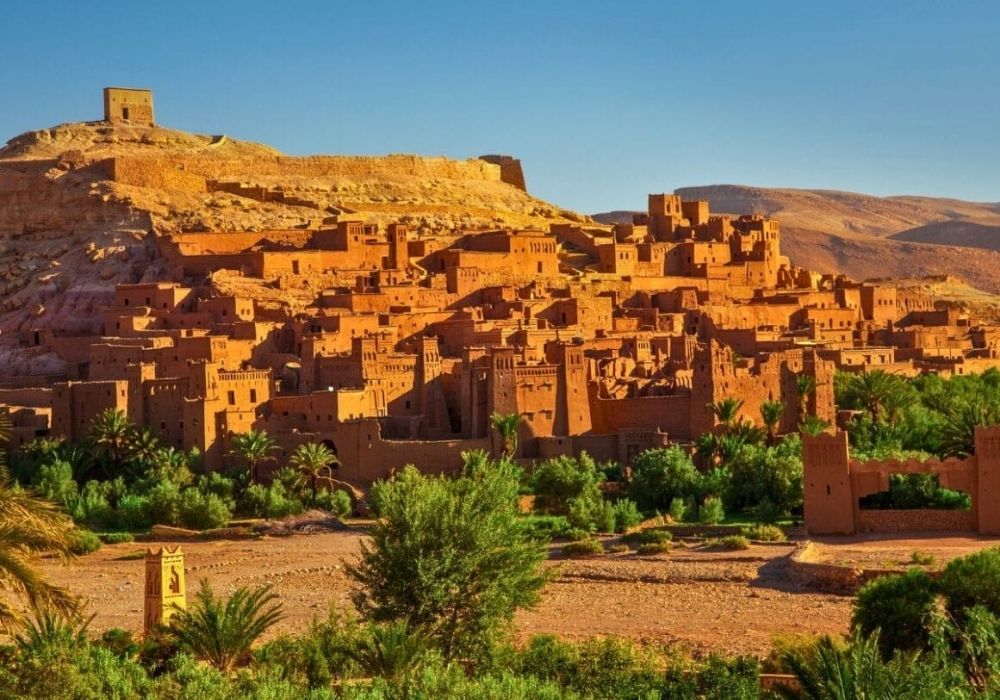
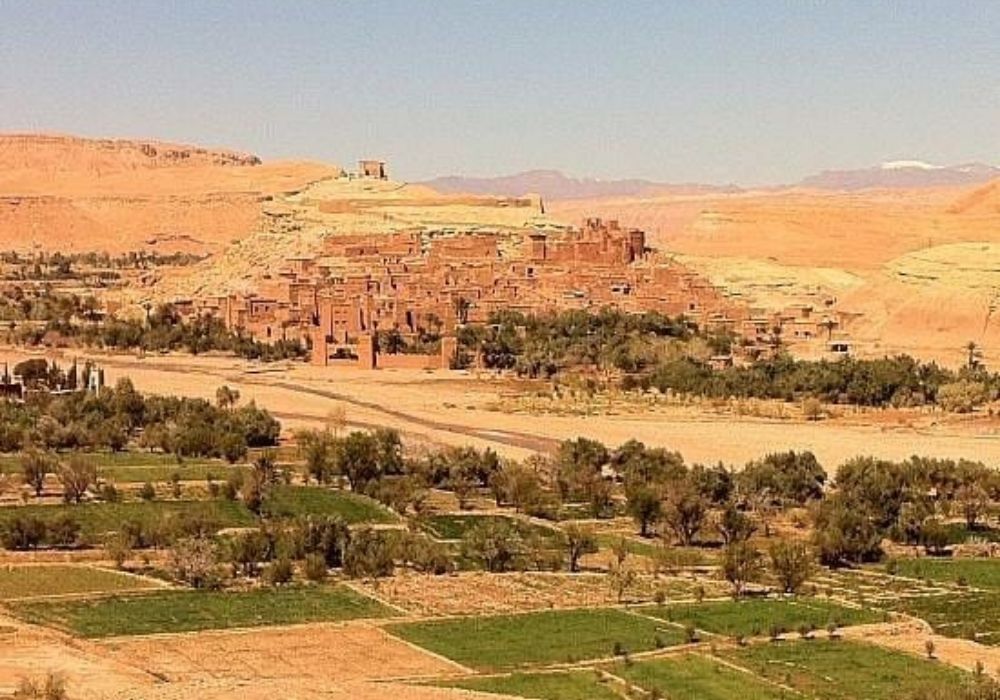
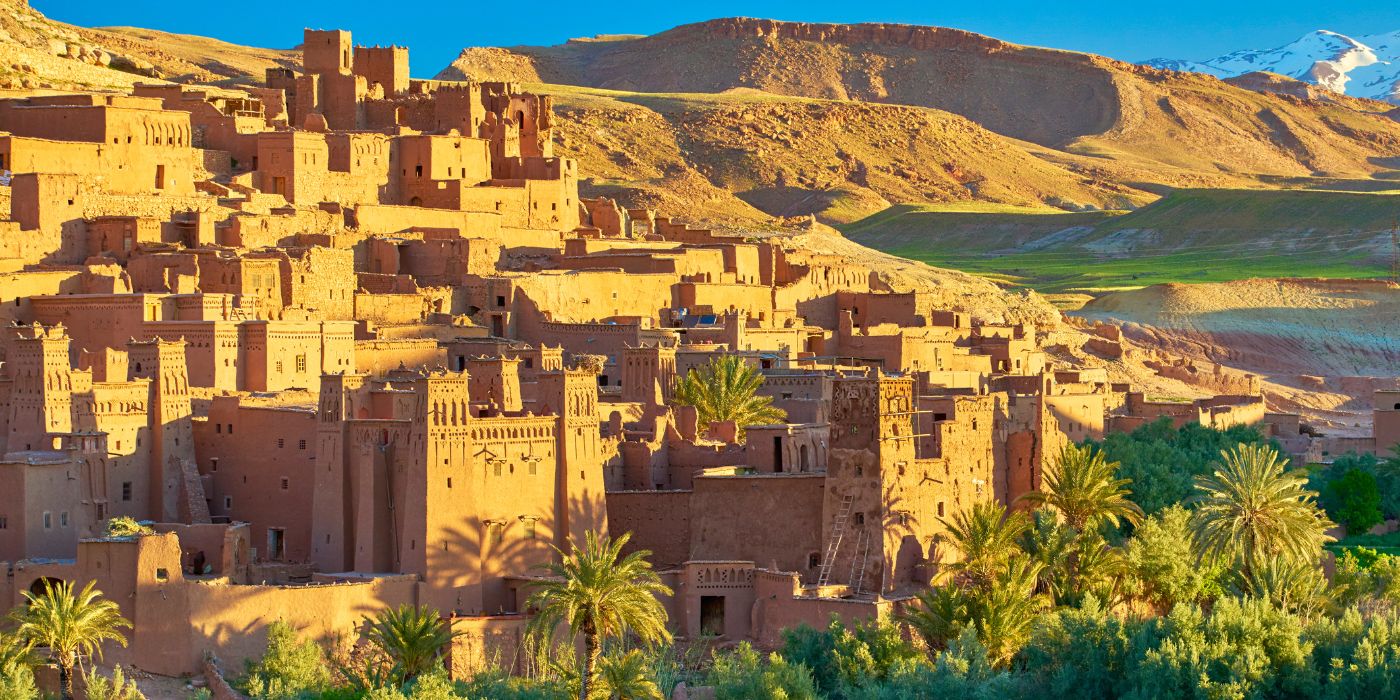
After breakfast, you will set off for the Kasbah Aït ben Haddou, a fortified town at the foot of the High Atlas Mountains in south-eastern Morocco. The entire old centre of this “mud-brick town” has been recognised as a UNESCO World Heritage Site since 1987. Kasbah Aït ben Haddou is one of Morocco’s most impressive historical landmarks and dates back to the 17th century. Hollywood blockbusters also frequently use this fabulous setting. From here, the tour continues through the Ounila Valley, lined with Berber villages and frequently abandoned kasbahs. The Berber gardens there and the play of colours in the rock and soil formations never cease to surprise and inspire. You reach Telouet, which belonged to the Lords of the Atlas, the Glaoui family. None of the three main buildings making up the Kasbah can be entered as their ruinous state does not permit it. The one area of the Kasbah that had been opened to visitors is now closed due to the damage caused by the earthquake that struck Morocco in September 2023. Nevertheless, it is still worth visiting the exterior with a local guide to discover its rich history. In the late afternoon, you will cross the Tizi-n-Tichka Pass and arrive at Marrakech, your destination for the day.

Day 9: Ouarzazate – Ait Ben Haddou – Telouet – Marrakech

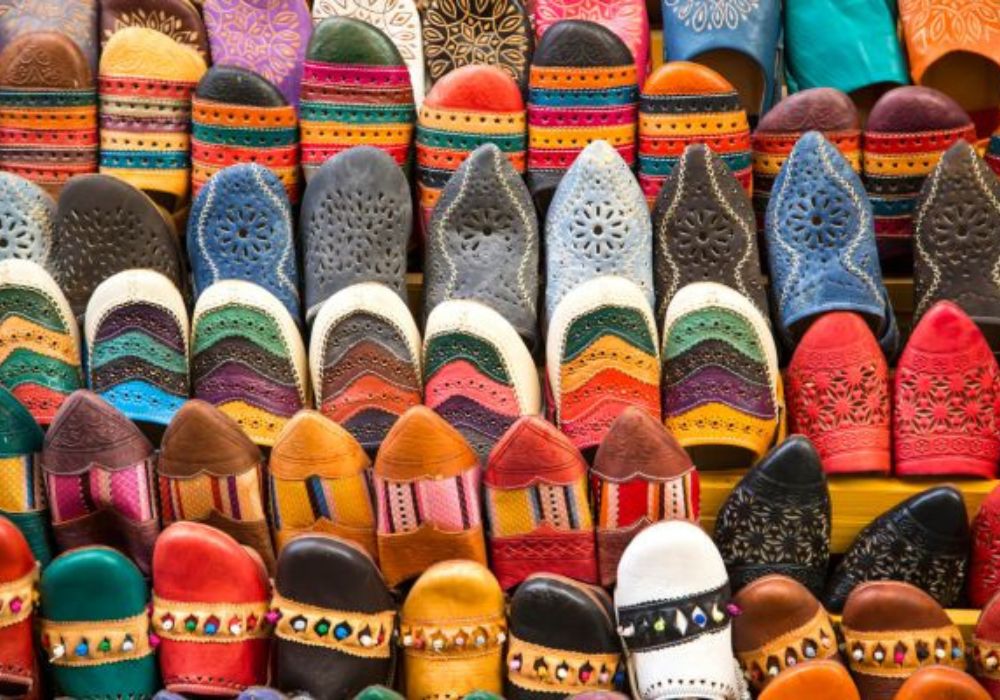
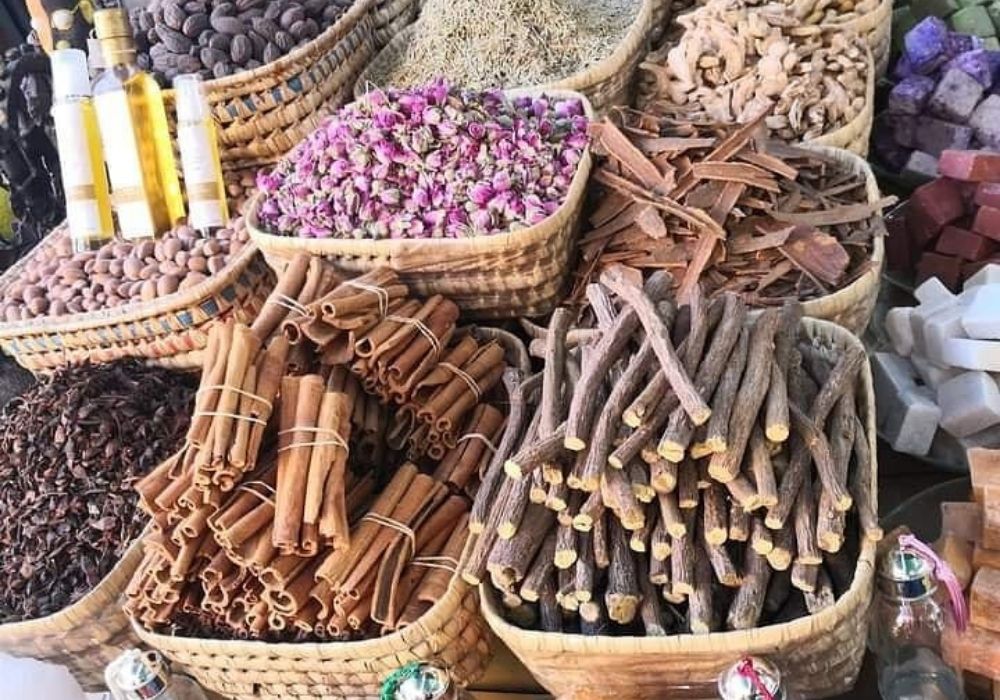
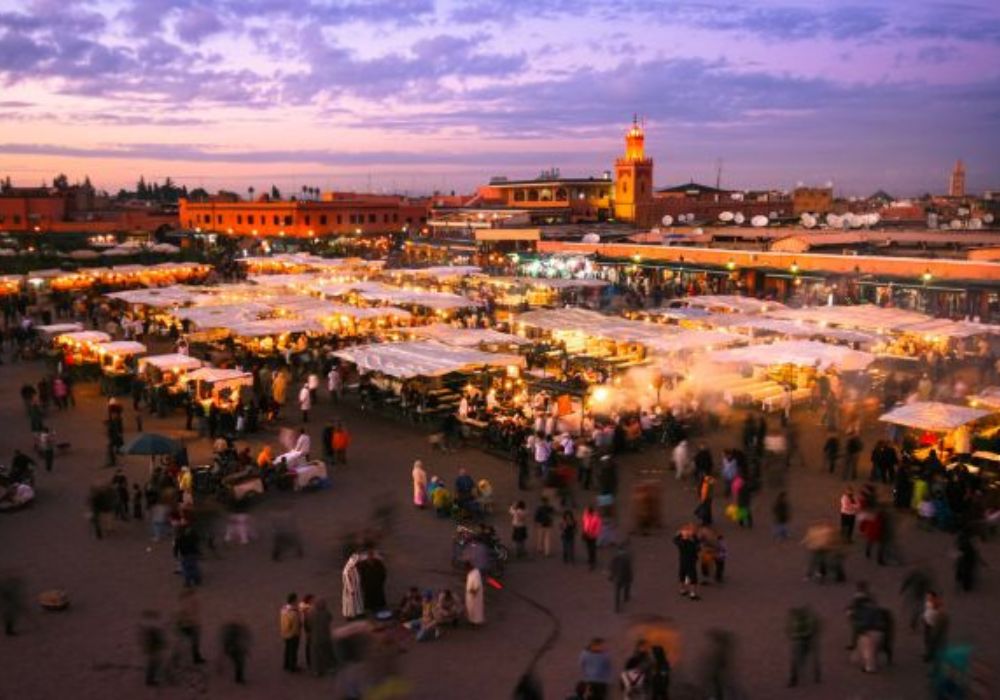
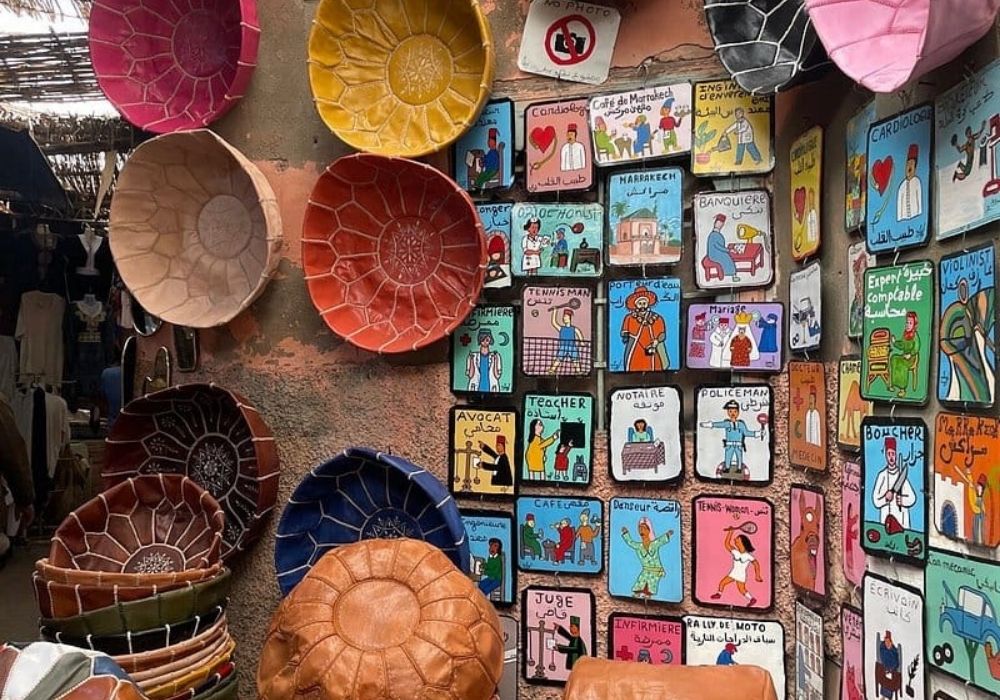
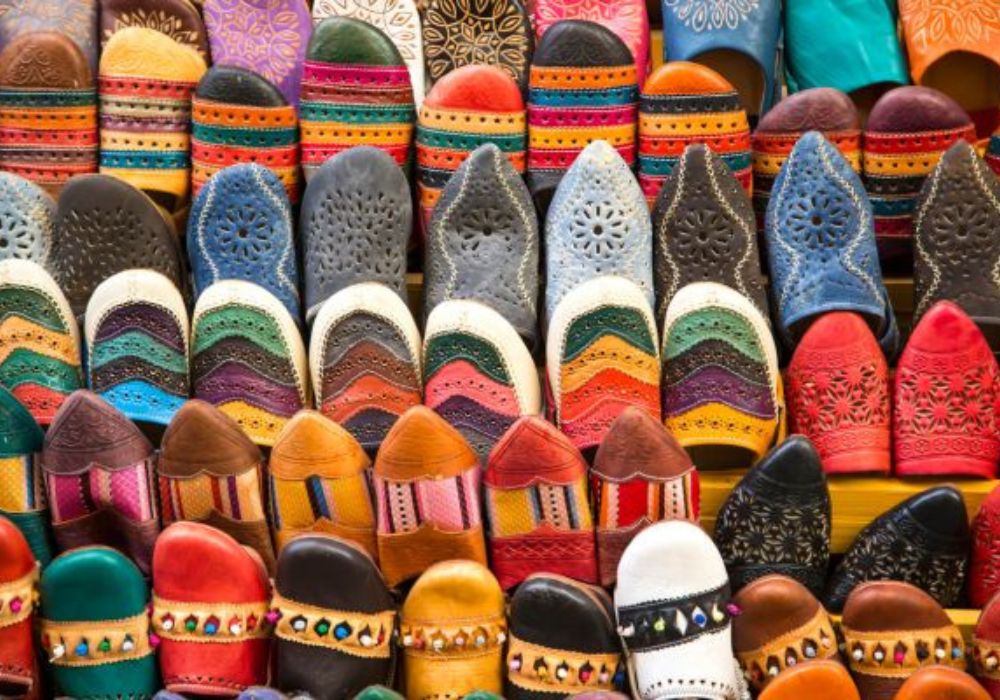
Marrakech is best known for its central Djemaa El Fna, bustling with juice stalls, dried fruit and nut vendors, henna artists, snake charmers, storytellers, and numerous nightly food stalls. You can visit the following attractions according to your time and preferences: The Majorelle Gardens: Designed by Jacques Majorelle and later owned by Yves Saint Laurent, this serene garden features fish pools, little bridges, paths, innumerable cacti, flowers, and trees. It also has a small Berber museum, a café and a restaurant serving delicious cuisine adapted from well-known Moroccan food. The garden is famous for its “Majorelle blue” pots, a striking colour replicated throughout the city. Le Jardin Secret: The Secret Garden, a true Islamic Paradise Garden, divided into four parts, each separated by a narrow water channel fed directly from the High Atlas is a magnificent alternative. Walking through the gardens slowly highlights the delicate simplicity of the colours in the planting along with the calming sounds of its fountains. Displays and a video explain the reconstruction of this abandoned garden adored by the famous British gardener, Monty Don, in his documentary Middle Eastern Paradise Gardens. The Koutoubia Mosque: This is the city’s landmark and the largest mosque in Marrakech, whose name comes from “al-Koutoubiyyin,” referring to its history as a hub for bookshops. The mosque, built in the traditional Almohad style, has a 69-metre tower adorned with four copper globes. El Bahia Palace:  Built for Ahmed Ibn Moussa, who was the Grand Vizier of Morocco, between 1894 and 1900 in the Alaoui style, this palace features 160 rooms around courtyards, with stucco panels, zellij decorations, tiled floors, carved cedar ceilings, and marble finishes. It is surrounded by an eight-hectare garden. Ben Youssef Medersa: A Quranic school founded by Sultan Abou el Hassan (1331–49) and rebuilt in the 1560s under the Saadians. It housed around 800 students who memorised the Quran. The building showcases Moroccan architectural styles with zellij tiling, stucco plasterwork, and carved cedar wood. The Saadian Tombs: Dating back to Sultan Ahmad al-Mansur (1578-1603) and rediscovered in 1917. The mausoleum is the final resting place for about sixty members of the Saadi Dynasty and is a major attraction. The Jewish Mellah: All Moroccan cities have a Jewish quarter and many synagogues are still standing, though far fewer are still in use. There are even Jewish quarters in small villages throughout the country, often forgotten. The Mellah district in Marrakech was an area inhabited by all non-Muslims, not only Jews. The Souks: The vibrant heart of Marrakech, offering a variety of handicrafts, spices, traditional medicines, and more. Visitors can find Moroccan slippers (babouches), leather goods, textiles, pottery, and silver jewellery, and try bargaining for a real bargain. People, places, smells, colours and buildings……as if from 1000 and one night! FYI: You can buy entry tickets at each monument during your guided tour of Marrakech, but Majorelle Garden tickets must be booked online in advance Tip: If you would prefer a traditional Moroccan cooking class instead of a tour of Marrakech, we would be happy to organise this for you for an additional fee. You will spend the night in a riad
Day 10: Marrakech Sightseeing – Departure

Transfer from your riad to Casablanca airport in time for the check-in before your flight. You will have just enjoyed the most delightful and stunning tour from Casablanca to the Sahara Desert, Chefchaouen, and Imperial Cities.
Includes/Excludes

  • Private transport in air-conditioned 4×4 or deluxe van with fuel.
  • Airport transfers and pick-up/drop-off at your hotel or riad.
  • Experienced multilingual (English/French/Spanish/Italian) Berber driver-guide.
  • Accommodation in quality riads and hotels with private bathrooms.
  • One night in a luxury desert camp in Erg Chebbi (private shower and toilet).
  • Daily breakfast and dinners (except in Rabat, Fes, Marrakech, and Chefchaouen).
  • Camel ride in Erg Chebbi dunes with guide (optional 4×4 transfer available).
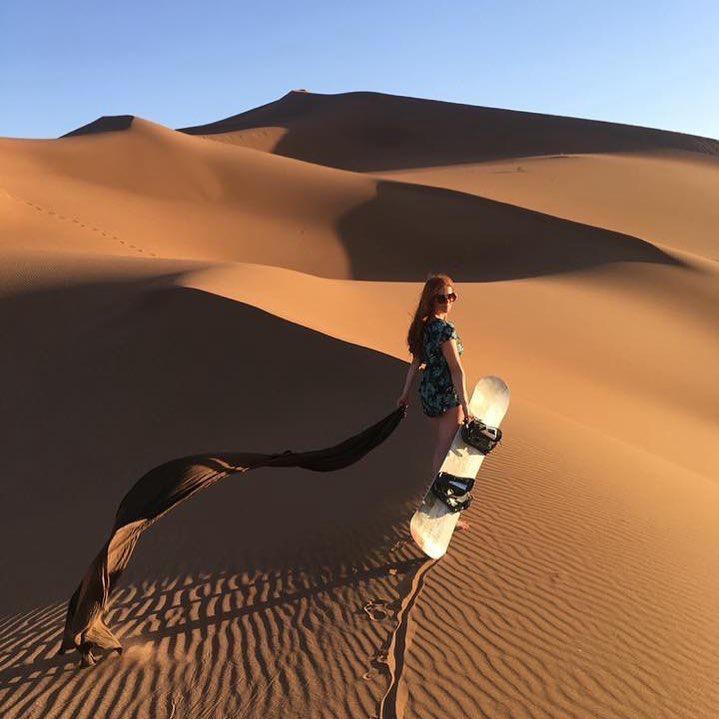
  • Sandboarding in the dunes (on request).
  • Berber music and campfire entertainment in the desert.
  • Free time to explore Aït Ben Haddou, the Ounila Valley, and local villages.
  • Luggage handling and porter service.
  • Sightseeing with licensed local guides in Fes and Marrakech.
  • Entrance fees (except in Casablanca, Rabat, Fes, and Marrakech).
  • Tea, coffee, and bottled water in the desert.
  • Private transport in air-conditioned 4×4 or deluxe van with fuel.
  • Airport transfers and pick-up/drop-off at your hotel or riad.
  • Experienced multilingual (English/French/Spanish/Italian) Berber driver-guide.
  • Accommodation in quality riads and hotels with private bathrooms.
  • One night in a luxury desert camp in Erg Chebbi (private shower and toilet).
  • Daily breakfast and dinners (except in Rabat, Fes, Marrakech, and Chefchaouen).
  • Camel ride in Erg Chebbi dunes with guide (optional 4×4 transfer available).
  • Sandboarding in the dunes (on request).
  • Berber music and campfire entertainment in the desert.
  • Free time to explore Aït Ben Haddou, the Ounila Valley, and local villages.
  • Luggage handling and porter service.
  • Sightseeing with licensed local guides in Fes and Marrakech.
  • Entrance fees (except in Casablanca, Rabat, Fes, and Marrakech).
  • Tea, coffee, and bottled water in the desert.

Frequently asked questions

Is Morocco a safe and welcoming country for travelers?

Yes, Morocco is widely considered a safe and welcoming destination for travelers from around the world. Moroccans are renowned for their hospitality, especially toward guests. We prioritize your well-being, using only reliable, professional drivers and carefully vetted accommodations. Your dedicated driver and guide provide local knowledge, ensuring a safe and stress-free experience throughout your Morocco tours.

What is included in the price of your private Morocco tours?

Our comprehensive private Morocco tours packages typically include all transportation in a comfortable, air-conditioned 4x4 vehicle, the services of a professional, English-speaking driver/guide, all accommodation (hotels, riads, and desert camps), daily breakfast and dinner, and activities like camel trekking in the Sahara. We clearly list all inclusions and exclusions on the individual tour page, ensuring complete transparency and peace of mind.
- Pets (assistance dogs allowed)

What is the accommodation like, particularly the Sahara desert camps?

We hand-select accommodations based on authenticity, comfort, and local charm, ranging from traditional riads in the cities to beautiful kasbahs in the mountains. For the desert, you will stay in high-quality camps (standard or luxury) featuring comfortable tents with proper beds and private or shared bathrooms, ensuring a magical, yet restful, night under the stars on your desert tour.

You might also like...